
MASTER OF SCIENCE IN APPLIED ARTIFICIAL INTELLIGENCE

AT A GLANCE
Earn your master’s degree online or on-campus in just 16-20 months to position yourself for success in artificial Intelligence.
Online: Summer, Fall, and Spring Start Dates
Campus Full-Time: Spring and Fall Dates
Online
On-Campus FT
Program Length:
20 Months
Total Units:
30 Units
Approximate Total Fees in INR:
12,49,000
Next Term Starts:
Jan 04, 2027
Priority App Deadline:
Sep 30, 2026
Program Length:
16 Months
Total Units:
30 Units
Cost Per Unit:
$2,000
Next Term Starts:
Jan 2027
Priority App Deadline:
Oct 15, 2026
Quick Facts
Program consists of 10 courses: 2 courses per semester for online students, 3-4 per semester for on-campus.
ABOUT THE PROGRAM
The University of San Diego’s innovative AI master’s degree program (online or on-campus) is committed to training current and future artificial intelligence professionals for the important and fascinating work ahead. The strengths of our program include a significant emphasis on real-world applications, ethics, moral responsibility, and social good in designing AI-enabled systems.
Customize Your Experience: Online or Campus, Full-time
Designed to prepare graduates for success in this vitally important and fast-growing field, this master’s in applied artificial intelligence master’s degree program has been developed by AI experts in close collaboration with key industry and government stakeholders to provide in-depth practical and technical training.
10 courses
Take 10 courses, totaling 30 units. (Full-time campus students take 3 courses in the Fall, 4 in the Spring, and another 3 the next Fall)
2 formats
Choose our 100% online format across 5 semesters, or join us for in-person classes 2-3 times per week in San Diego over 3 semesters
Courses you will take
Industry Insights
51.8%
The AI market share of the IT services industry in India
$15.7 trillion
AI’s predicted contribution to the global economy by 2030
INR 1 Million
Average annual salary of an AI Developer in India
Sources: PwC, Statista.com, Glassdoor.com
A closer look – artificial intelligence at usd
Designed by Leading Innovators and Educators
University of San Diego faculty bring deep tech expertise to the programs, guided by elite advisory boards of Silicon Valley veterans, entrepreneurs, and industry leaders. The curriculum is refreshed annually to align with evolving industry demands.

Damien Benveniste, PhD
Founder, TheAIEdge AI Program Advisory Board Member

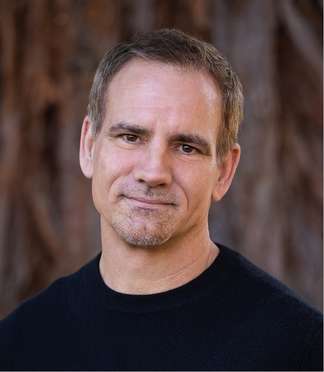
Eric Colson
DS & ML Advisor, Activation Fund AI Program Advisory Board Member


Imane Khalil, PhD
Associate Dean of Graduate Programs and Professor, Mechanical Engineering


Albert Wang
Sr. Investment Director, Qualcomm Ventures AI Program Advisory Board Member


Vitor Carvalho, PhD
Principal Applied Science Manager at Microsoft AI Program Advisory Board Member


Chell Roberts, PhD
Dean, Shiley-Marcos School of Engineering
What can I do with this degree?
The program is an ideal launchpad for graduates to work in one of the world’s fastest-growing domains in high-impact positions such as:
- AI Engineer
- Machine Learning Engineer
- Natural Language Processing Scientist
- Robotics Engineer
- Software Engineer
- Software Developer
- Computational Linguist
- Human-Centered Machine Learning
- Designer
This program is ideally suited to those with a background in science, mathematics, engineering, healthcare, statistics, or technology. While these are not requirements, we advise potential students to review program requirements and expectations prior to applying to ensure the chosen program is best suited for your background and/or future goals.
Potential students are encouraged to review the available resources to gauge program readiness. This is a good way to gain a good sense of basic technical background and time management skills.

Program Outcomes
This program enables you to gain expertise in the application of diverse cutting-edge AI technologies across industries related to technology, operations, health care, defense, finance, and marketing. Upon graduation, you will:
- Apply diverse AI technologies that leverage data to enable automated business decision making, develop programs for information extraction and interface with databases, as well as have an in-depth knowledge of IoT that has a widespread usage across smart homes, self-driving cars and more.
- Develop AI systems within the legal framework while following ethical standards and socially responsible practices.
- Effectively propagate the value of AI-based systems and software among organizations.

WHERE USD GRADUATES WORK



Testimonials
Frequently Asked Questions
Interest in and usage of Machine Learning systems has increased dramatically in recent years. More and more innovative products and research rely on Machine Learning systems that leverage data to make predictions and identify trends. However – as with many cutting-edge fields – Machine Learning systems are often implemented improperly. As a result, many Machine Learning systems are unreliable, inefficient, or even useless. Machine Learning Operations (MLOps) is a methodology whose goal is to design, build, deploy, and maintain machine learning models properly. MLOps combines practices from Machine Learning, Data Engineering, and DevOps to ensure that Machine Learning models and algorithms are reliable, efficient, and – most importantly – useful. This course will introduce students to the key concepts of MLOps and a holistic method of designing suitable ML systems. Students will learn and perform the best practices for building Machine Learning systems with hands-on learning experiences and real-world applications. While students will learn about and implement some Machine Learning algorithms in this course, this course is not intended to teach them about the field of Machine Learning. Rather, students will learn how to properly design Machine Learning systems throughout the entire lifecycle.
Prerequisites: AAI 510, AAI 511, AAI 520, AAI 521, AAI 530, and AAI 531
Artificial Intelligence (AI) and Machine Learning (ML) are transforming society through their ability to model complex systems and compute how to act effectively and safely in a wide variety of situations. This course provides a structured introduction to the fundamental principles and core techniques that underpin AI/ML, while also exploring their practical applications and limitations. Students will engage with topics ranging from intelligent agents and heuristic search to mathematical optimization, supervised and unsupervised learning, forecasting, deep learning architectures, and reinforcement learning. The course emphasizes critical thinking about problem formulation, algorithm selection, and evaluation, preparing students to navigate the full lifecycle of AI/ML projects. Real-world applications in areas such as computer vision, natural language processing, forecasting, and decision-making are examined to connect theory with practice. By the end of the course, students will have the knowledge necessary to apply these techniques in a wide range of professional contexts.
This course provides a comprehensive introduction to AI Agents, covering fundamental concepts, popular frameworks, essential tooling, and practical development. Students will learn to build, evaluate, and manage AI agents, culminating in an integration of subject matter expertise into agent outputs and the ethical considerations surrounding this rapidly evolving field.
Prerequisites: AAI 500 and AAI 501
Neural networks have enjoyed several waves of popularity over the past half-century. The many applications of neural networks include apps that identify people in photos, automated vision systems for large-scale object recognition, smart home appliances that recognize continuous, natural speech, self-driving cars, and software that translates from any language to any other language. In this course, students will learn the fundamental principles and concepts of neural networks and state-of-the-art approaches to deep learning using in-demand Python packages, such as TensorFlow and PyTorch. Students will learn to design neural network architectures and training methods using hands-on assignments and will perform comprehensive final projects in this course. Prerequisites: AAI 500 and AAI 501